
Restorative Dentistry
Crowns
Crowns Explained
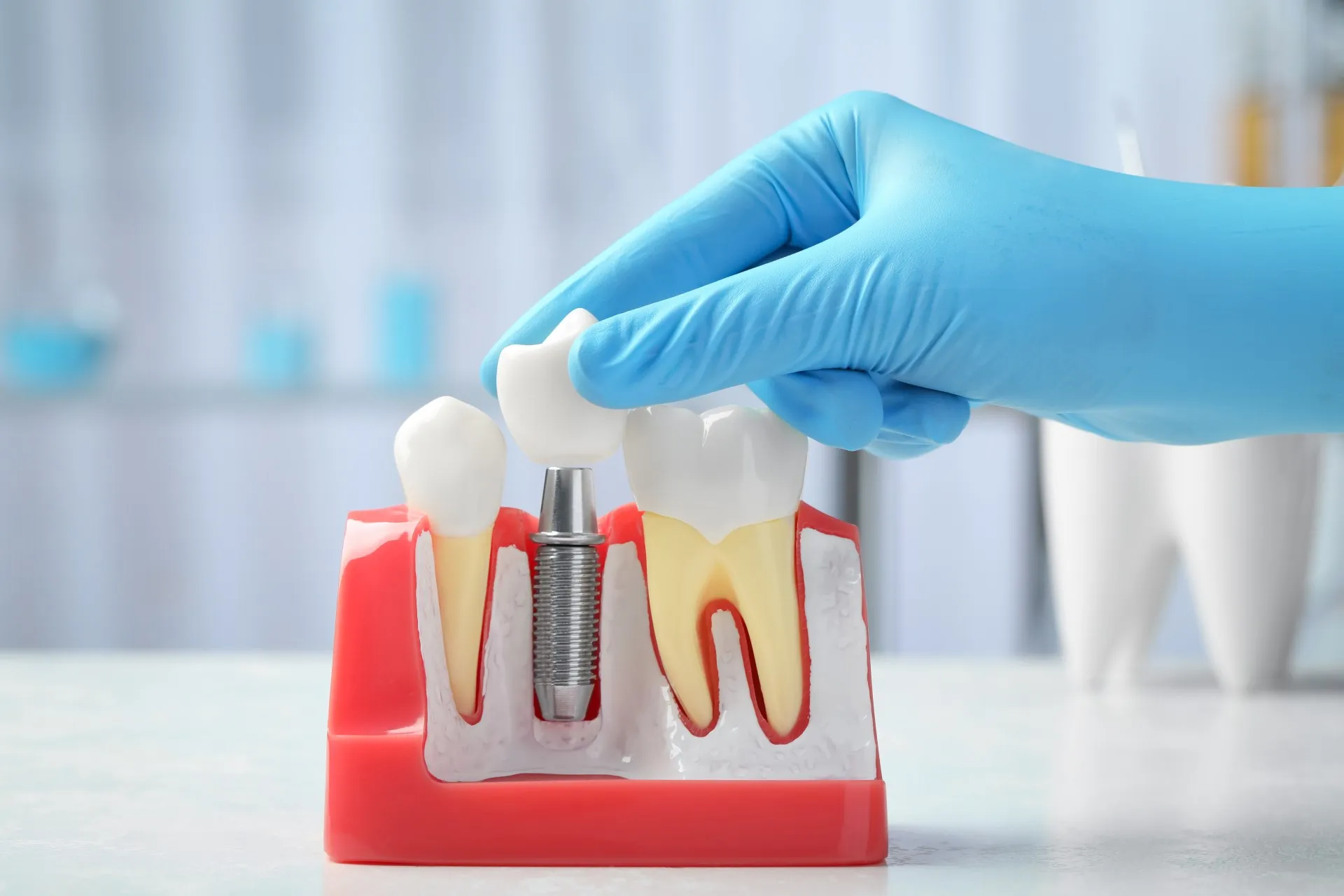
Dental crowns are custom-made restorations that completely cover and protect a damaged or weakened tooth. At Nova Dental Care of Chantilly, crowns are used to restore teeth that have been fractured, severely decayed, root canal treated, or worn down from grinding. A crown essentially acts as a new outer surface for the tooth, restoring its full strength, function, and natural appearance while protecting what remains of the underlying structure.
Crowns can be made from several different materials, each with its own benefits. Porcelain and all-ceramic crowns offer the most natural appearance and are typically used for front teeth or anywhere aesthetics are a priority. Porcelain-fused-to-metal crowns combine strength with a tooth-colored exterior, making them a versatile option for both front and back teeth. Gold and metal alloy crowns are extremely durable and gentle on opposing teeth, though their appearance limits them to back teeth where they aren't visible. Zirconia crowns, an increasingly popular option, combine excellent aesthetics with exceptional strength.
The crown procedure typically takes two appointments. At the first visit, the tooth is prepared by removing decay and shaping it to receive the crown, after which an impression or digital scan is taken. A temporary crown protects the tooth while the permanent crown is fabricated, usually within one to two weeks. At the second appointment, the temporary is removed and the permanent crown is bonded into place. Some practices offer same-day crowns using CEREC or similar technology, where the crown is milled in-office and placed in a single visit. With proper care, dental crowns typically last 10 to 15 years and often longer.
Crowns Approach
When a tooth is damaged enough to need a crown, the goal isn't just to restore it but to do so in a way that lasts. At Nova Dental Care of Chantilly, we take time to identify the right crown material for each individual situation, considering factors like the tooth's location, the bite forces it will face, your aesthetic preferences, and your budget.
We use precise impression techniques and work with experienced dental labs to ensure every crown fits accurately and looks natural. For front teeth, we focus on shade matching and translucency so the restoration blends seamlessly with surrounding teeth. For back teeth, we prioritize materials that can withstand chewing forces for many years. Above all, we communicate clearly about what to expect from the procedure, what the crown process feels like, and how to care for your restored tooth long-term.
Four simple steps, every time.
From the moment you sit down to the moment you leave, here's what a routine cleaning and exam looks like at our Chantilly office.
Evaluate
We examine the tooth, take X-rays, and determine whether a crown is the right restoration based on the extent of damage and remaining tooth structure.
Shape
The tooth is gently shaped under local anesthesia to make room for the crown, after which a digital scan or impression captures its precise dimensions.
Restore
A custom-made crown is bonded to the prepared tooth, restoring its full strength, function, and natural appearance.
Support
Routine cleanings, good oral hygiene, and avoiding habits like ice-chewing help your crown last 10 to 15 years or longer.