
General Dentistry
Oral Cancer Screening
Oral Cancer Screening Explained
An oral cancer screening is a quick, painless examination that checks the soft tissues of your mouth, throat, lips, tongue, and neck for early signs of oral cancer and precancerous changes. Oral cancer is most treatable when caught early, yet it often develops without obvious symptoms in its earliest stages, which is why routine screening matters so much. At Nova Dental Care of Chantilly, an oral cancer screening is included as part of your regular dental exam, so you are being checked at every visit without needing to schedule anything separate. During the screening, we visually inspect and gently feel the tissues of the mouth and neck, looking for unusual sores, red or white patches, lumps, thickening, or any area that does not look or feel normal. The entire process takes only a few minutes and requires no preparation. If we notice anything that warrants a closer look, we will explain what we found, document it, and recommend the appropriate next step, which may be a short follow-up to monitor the area or a referral for further evaluation. Early detection through routine screening can make a meaningful difference in outcomes.
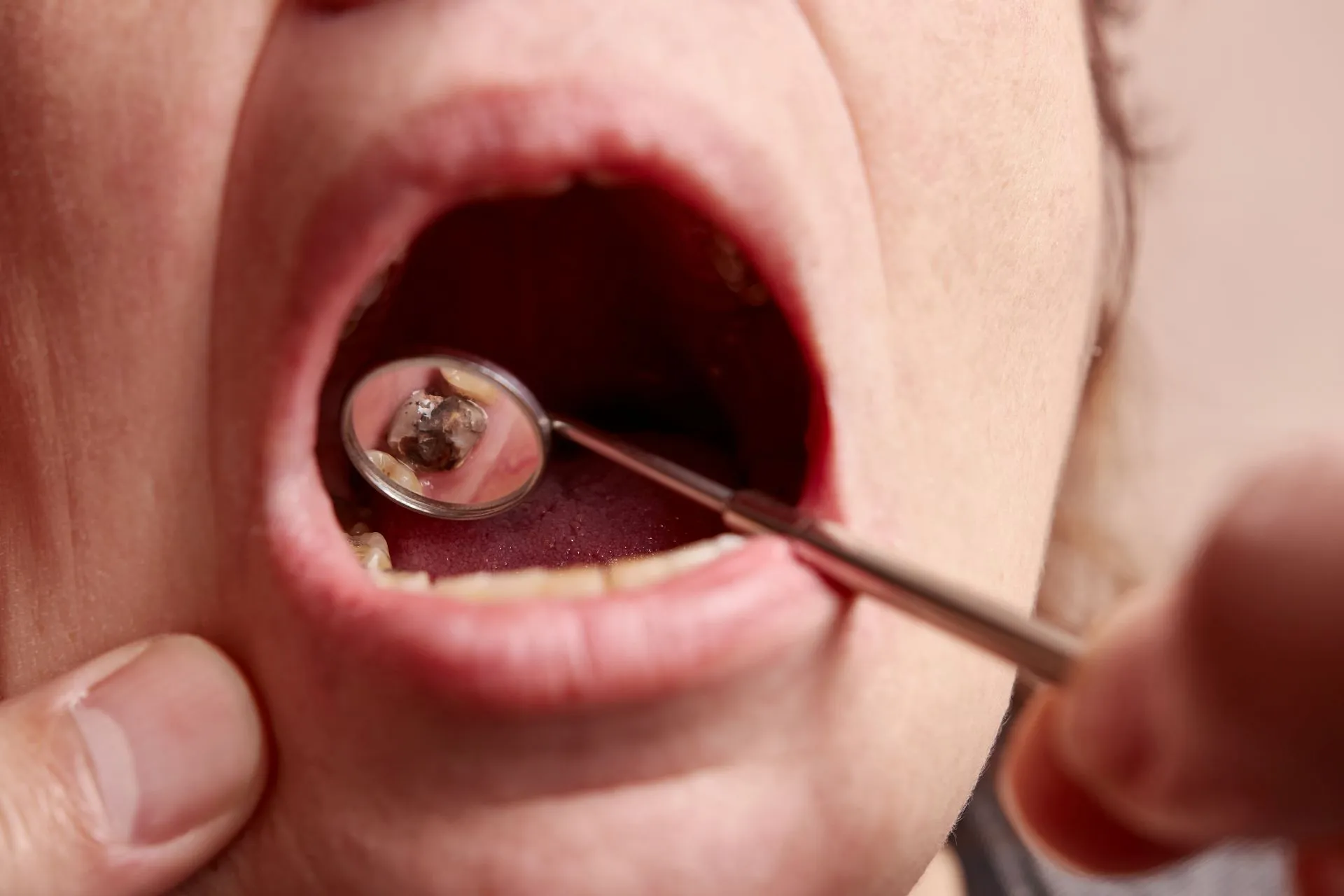
Oral Cancer Screening Approach
At Nova Dental Care of Chantilly, we believe prevention and early detection are the most powerful tools in dentistry. We make oral cancer screening a standard part of every comprehensive exam rather than an add-on, because consistency is what catches changes early. We take time to know your mouth so that we can recognize when something has changed from one visit to the next. If we ever find an area of concern, we explain it clearly, without alarm, and walk you through exactly what happens next so you always feel informed and supported.

Four simple steps, every time.
From the moment you sit down to the moment you leave, here's what a routine cleaning and exam looks like at our Chantilly office.
Review
We review your health history and ask about any risk factors or changes you have noticed, such as sores that have not healed, persistent hoarseness, or areas of discomfort.
Examine
We visually inspect the lips, tongue, cheeks, floor and roof of the mouth, and throat, looking for discoloration, sores, or texture changes.
Palpate
We gently feel the tissues of the mouth, jaw, and neck to check for lumps, swelling, or firm areas that are not visible on the surface.
Advise
If everything looks healthy, we note it in your record for comparison next visit. If we find a concern, we explain it and recommend monitoring or referral as appropriate.
Oral Cancer Screening FAQs
An oral cancer screening is a visual and physical examination of the mouth, throat, and neck to look for early signs of oral cancer or precancerous changes. It checks for unusual sores, patches, lumps, or tissue changes. The screening is quick and painless and is included as part of your routine dental exam at Nova Dental Care.
No, an oral cancer screening is completely painless. It involves looking at the soft tissues of your mouth and gently feeling your jaw and neck. There are no needles, no scraping, and no discomfort. The entire screening takes only a few minutes.
Most adults should have an oral cancer screening at least once a year, and it is typically performed at your regular dental checkups. Patients with higher risk factors, such as tobacco or heavy alcohol use, may benefit from more frequent screening. Because we include screening at routine exams, staying on your regular visit schedule keeps you covered.
Risk factors include tobacco use of any kind, heavy alcohol consumption, prolonged sun exposure to the lips, and infection with certain strains of HPV. Age and a family history can also play a role. However, a meaningful number of oral cancer cases occur in people with no obvious risk factors, which is why routine screening for everyone is important.
Common warning signs include a sore that does not heal, red or white patches in the mouth, a lump or thickening in the cheek, difficulty swallowing, persistent hoarseness, or a feeling that something is caught in the throat. Any sore or change that lasts more than two weeks should be evaluated. If you notice any of these between visits, contact us.
Because the screening is performed as part of a routine dental exam, there is usually no separate charge beyond your standard exam visit. If a specialized screening device or follow-up diagnostic is recommended, we will explain any associated cost in advance. Many preventive exams are covered by dental insurance.
If we notice an area of concern, it does not automatically mean cancer. Many findings turn out to be harmless. We will document the area, and depending on what we see, we may ask you to return in a couple of weeks to see if it has changed, or refer you to a specialist for a biopsy or further evaluation. We guide you through every step.
While not all oral cancer is preventable, you can significantly lower your risk by avoiding tobacco, limiting alcohol, protecting your lips from excessive sun, and maintaining good oral hygiene. The HPV vaccine may also reduce risk of HPV-related cancers. Routine screening does not prevent cancer but dramatically improves the odds of catching it early when it is most treatable.
Oral cancer caught in its earliest stages has a much higher survival rate and typically requires less invasive treatment. When detected late, it is harder to treat and outcomes are poorer. Because early oral cancer often causes no pain or obvious symptoms, routine screening is frequently the only way to catch it early, which is why we make it a standard part of your care.