
General Dentistry
Root Canals
Root Canals Explained
Root canal therapy is a dental procedure used to treat infection or severe inflammation inside a tooth. At Nova Dental Care of Chantilly, root canals save teeth that would otherwise need to be extracted, preserving your natural smile and avoiding the long-term complications that come with tooth loss. Despite their reputation, modern root canals are routine procedures performed under local anesthesia and are typically no more uncomfortable than getting a filling.
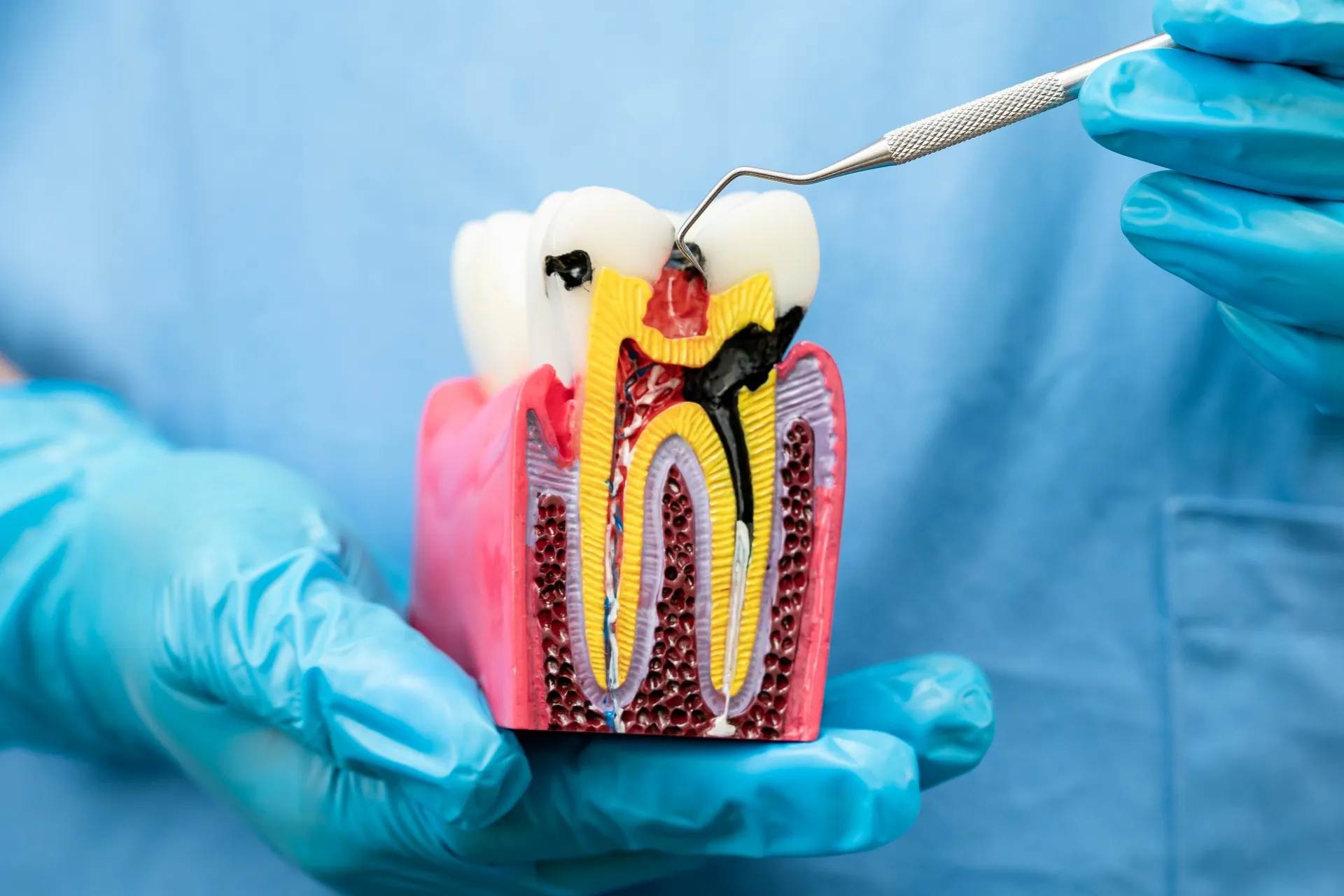
Inside every tooth is a chamber containing soft tissue called pulp, which includes nerves, blood vessels, and connective tissue. When pulp becomes infected or inflamed, usually due to deep decay, repeated dental procedures, a crack, or trauma, the result is often severe pain, sensitivity to hot and cold, swelling, or an abscess. Root canal therapy removes the infected or damaged pulp, cleans and disinfects the inside of the tooth, and then seals it to prevent reinfection. Once treated, the tooth is no longer alive in the traditional sense but remains functional and can last a lifetime with proper care.
After a root canal, the tooth is typically restored with a crown, particularly when the treatment is performed on a back tooth that experiences significant chewing forces. The crown protects the now-brittle tooth from fracture and restores full chewing function. Most root canals are completed in one or two visits, and patients typically experience relief from the original pain almost immediately. Modern techniques, including digital imaging and rotary instrumentation, have made root canal therapy faster, more comfortable, and more predictable than ever before.

Root Canals Approach
Many patients dread root canals, often because of outdated stories or anxiety about the procedure. At Nova Dental Care of Chantilly, we focus on making the experience as comfortable and predictable as possible. We use modern anesthesia techniques to ensure you feel no pain during the procedure, and we explain each step clearly so you know what to expect.
We take time to diagnose accurately using digital imaging, which lets us see the full anatomy of the tooth and plan treatment precisely. For complex cases, we may refer to or work with an endodontist (a root canal specialist) to ensure the best possible outcome. Our goal is always to save the natural tooth when possible because preserving your own teeth is almost always better than replacing them with a bridge or implant. After the root canal, we walk you through aftercare and follow up to make sure the tooth is healing properly.
Four simple steps, every time.
From the moment you sit down to the moment you leave, here's what a routine cleaning and exam looks like at our Chantilly office.
Diagnose
X-rays and a clinical exam confirm the infection or inflammation inside the tooth and identify the best treatment approach.
Clean
Under local anesthesia, the infected pulp is removed and the inside of the tooth is thoroughly cleaned, shaped, and disinfected.
Seal
The cleaned tooth is sealed with a biocompatible filling material called gutta-percha to prevent reinfection.
Restore
A crown or filling is typically placed afterward to protect the tooth and restore full function for many years to come.
Root Canals FAQs
Modern root canal treatment is designed to relieve pain, not cause it. The procedure is performed under local anesthesia, so you won't feel pain during treatment. Most patients describe the experience as similar to getting a filling. Some mild discomfort or tenderness is normal for a few days after the procedure and is easily managed with over-the-counter pain relievers.
Root canal therapy typically costs between $700 and $1,800 depending on which tooth is being treated. Front teeth (incisors and canines) are generally less expensive than molars because they have fewer roots and canals. Most insurance plans cover root canal therapy at 50% to 80% after the deductible. The cost of a crown after the root canal is typically separate.
Most root canals can be completed in 60 to 90 minutes for a single tooth. Complex cases or molars with multiple roots may require a second appointment of similar length. Many root canals are completed in a single visit, though some dentists prefer to perform the procedure in two stages to ensure complete disinfection between appointments.
A crown is almost always recommended after a root canal on back teeth (premolars and molars) because these teeth experience significant chewing forces and the tooth becomes more brittle after the pulp is removed. Front teeth may not always require a crown, depending on the amount of remaining tooth structure. We discuss the right restoration for your specific situation.
A properly treated and restored root canal tooth can last a lifetime. Studies show success rates of 90% or higher for root canal therapy. The tooth's longevity depends on the quality of the root canal, whether a crown was placed afterward, your oral hygiene, and any habits like grinding. Regular dental visits help monitor the tooth long-term.
Untreated infection in a tooth doesn't go away on its own. It typically gets worse, often leading to a dental abscess, severe pain, swelling, and in rare but serious cases, infections that spread to other parts of the body. Eventually, an untreated infected tooth will need to be extracted. Root canal therapy preserves the natural tooth, which is almost always preferable to extraction.
The only alternative to a root canal for an infected tooth is extraction, followed by replacement with a dental implant, bridge, or partial denture. Extraction is generally not recommended because preserving natural teeth is almost always preferable. Root canal therapy is significantly less expensive than the combination of extraction and tooth replacement.
Most patients feel significantly better after a root canal because the source of pain has been removed. Some mild tenderness or sensitivity is normal for several days, particularly when chewing. Over-the-counter pain relievers manage discomfort effectively. You can typically return to work and normal activities the same day or the day after.
Root canals have very high success rates, typically over 90%, but failure is possible. Causes include cracks in the tooth, complex root anatomy that wasn't fully treated, or new decay below the restoration. Symptoms of failure include returning pain, swelling, or a fistula on the gums. Failed root canals can sometimes be retreated successfully or referred to an endodontist for evaluation.