
Extractions & Oral Surgery
Tooth Extractions
Tooth Extractions Explained
A tooth extraction is the removal of a tooth from its socket in the jawbone. While preserving natural teeth is almost always our goal at Nova Dental Care of Chantilly, extraction is sometimes necessary when a tooth cannot be saved or its presence is causing larger problems. Common reasons include severe decay or infection beyond what can be treated with a root canal, advanced gum disease that has destroyed supporting bone, severely fractured teeth, impacted wisdom teeth, and crowding that requires removal of teeth to make room for orthodontic treatment.
There are two main types of extractions. Simple extractions are performed on visible teeth that can be loosened and removed with dental instruments under local anesthesia. These are typically routine procedures completed in 15 to 30 minutes. Surgical extractions are needed when a tooth is broken at the gum line, impacted (not fully erupted), or has complex root anatomy. Surgical extractions involve a small incision in the gum, sometimes removal of a small amount of bone, and may require stitches afterward. They take longer and may benefit from sedation in addition to local anesthesia.
After any extraction, the empty socket needs time to heal, typically 1 to 2 weeks for soft tissue healing and several months for full bone healing. We provide detailed post-operative instructions to support proper healing and prevent complications like dry socket. We also discuss tooth replacement options before or shortly after extraction because missing teeth lead to bone loss, shifting of adjacent teeth, and bite problems over time. Implants, bridges, or partial dentures can preserve your bite and prevent long-term complications.
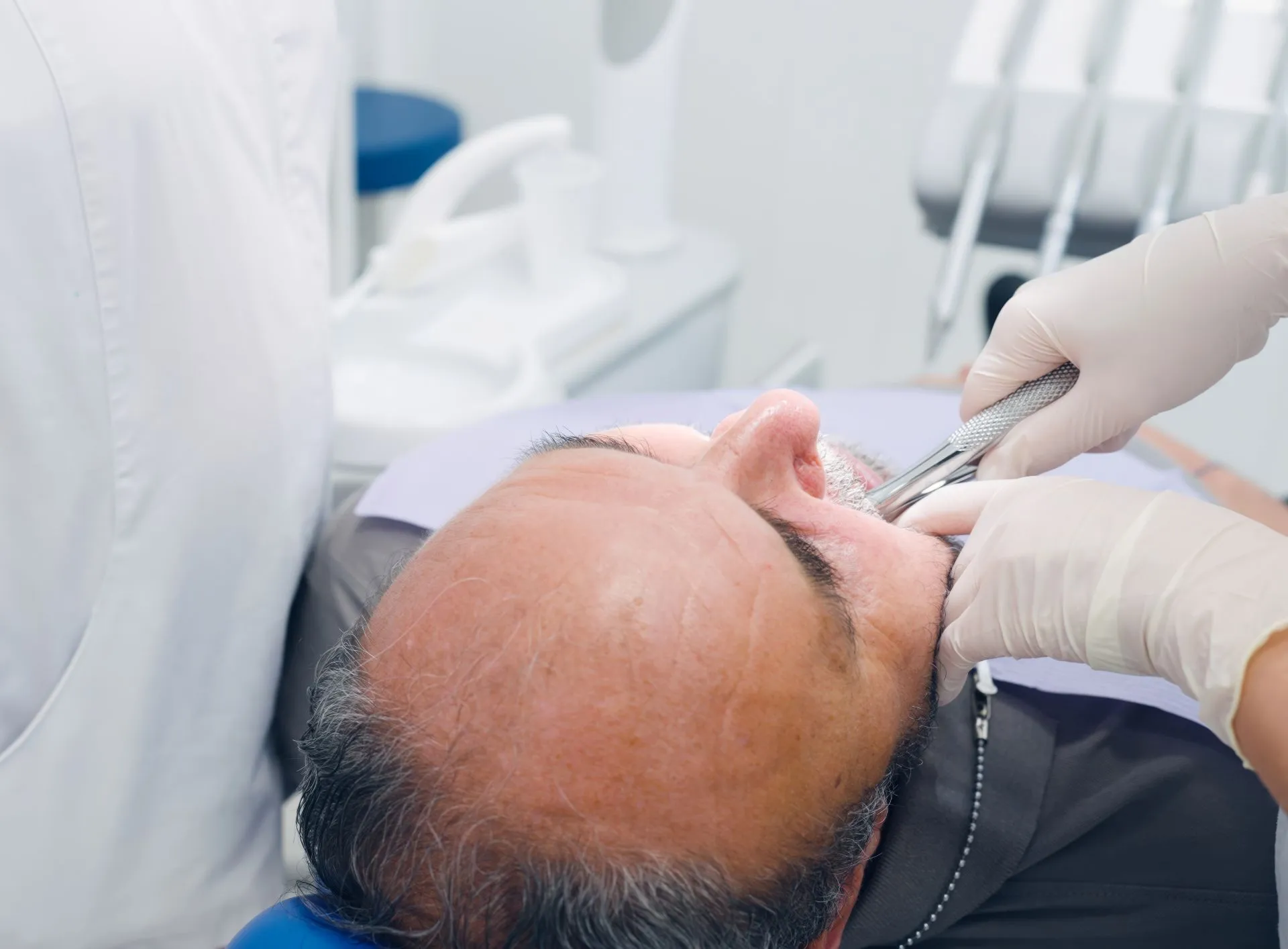
Tooth Extractions Approach
Extraction is always a last resort at Nova Dental Care of Chantilly. Before recommending removal, we thoroughly evaluate whether the tooth can be saved with a root canal, crown, periodontal treatment, or other restorative care. When extraction truly is the best option, we explain why clearly so you understand the reasoning and feel confident in the decision.
We perform most simple extractions in our office and refer complex cases to oral surgeons we trust when that produces the best outcome for the patient. We use modern anesthesia techniques and gentle technique to keep the procedure as comfortable as possible. After extraction, we discuss replacement options before you leave so you can plan ahead and understand how to protect your long-term oral health.

Four simple steps, every time.
From the moment you sit down to the moment you leave, here's what a routine cleaning and exam looks like at our Chantilly office.
Evaluate
We examine the tooth, take X-rays, and discuss whether extraction is truly necessary or whether the tooth can be saved with another treatment.
Prepare
We discuss the procedure, anesthesia options, and post-operative expectations, and answer any questions before beginning.
Extract
Under local anesthesia (and sedation if needed), the tooth is gently removed using specialized dental instruments.
Heal
Detailed post-operative instructions support proper healing, and we discuss replacement options to prevent long-term complications from the missing tooth.
Tooth Extractions FAQs
Simple extractions typically cost $150 to $400 per tooth. Surgical extractions including impacted wisdom teeth range from $300 to $1,000 per tooth, with more complex impactions costing more. Most insurance plans cover extractions at 50% to 80% after the deductible. Sedation, if used, is typically billed separately. We provide a detailed estimate before treatment.
The procedure itself is not painful. Local anesthesia completely numbs the tooth and surrounding area, so you'll feel pressure but not pain during the extraction. Most patients experience moderate discomfort for 24 to 72 hours afterward, well-managed with prescribed or over-the-counter pain relievers. Modern techniques have made extractions significantly more comfortable than they were in past generations.
Most patients return to work and normal activities within 1 to 3 days after a simple extraction, and 3 to 7 days after a surgical extraction. Soft tissue healing takes 1 to 2 weeks, and complete bone healing takes several months. Following post-operative instructions (soft foods, no straws, no smoking, gentle oral hygiene) significantly improves recovery.
The suction created by drinking through a straw or smoking can dislodge the blood clot that forms in the empty socket. This causes a painful condition called dry socket that significantly delays healing and is quite uncomfortable. Avoid straws and smoking for at least 48 to 72 hours after extraction, and longer for surgical extractions.
For the first 24 to 48 hours, stick to soft foods and liquids. Good options include yogurt, applesauce, smoothies (no straws), mashed potatoes, scrambled eggs, soup (not too hot), oatmeal, and pudding. Avoid hot foods, very cold foods initially, hard or crunchy foods, sticky foods, and acidic foods. Gradually return to normal eating over the next few days based on comfort.
The three main options are dental implants (the gold standard, surgically placed in the jawbone), dental bridges (using adjacent teeth as support), or removable partial dentures. Each has trade-offs. Implants typically offer the best long-term outcome but require greater investment. Bridges are faster but require modifying adjacent teeth. We discuss all options at extraction so you can plan ahead.
Most patients wait 3 to 6 months after extraction before implant placement, allowing the bone to heal fully. In some cases, an implant can be placed at the time of extraction (immediate implant placement). Other cases benefit from bone grafting at the time of extraction to preserve the bone for future implant placement. We discuss the right timeline for your specific situation.
Simple extractions usually don't require stitches because the socket closes naturally as it heals. Surgical extractions often involve stitches to close the gum tissue. Most modern stitches are dissolvable and don't require removal. Some surgical cases use stitches that need to be removed at a follow-up visit, typically 7 to 10 days after the procedure.
Adjacent teeth tend to shift over time toward the gap, which can cause bite problems, gum disease, and additional tooth loss. The opposing tooth above or below may also drift out of position. The bone in the area of the missing tooth gradually shrinks because it's no longer stimulated by the tooth root. While not every missing tooth must be replaced, we discuss the long-term consequences so you can make an informed decision.